There's a number that comes up whenever someone starts selling something on the side: £1,000. It's the trading allowance, it's real, and for plenty of people it means no tax return, no accountant and no fuss. Sell a few handmade candles, walk a neighbour's dog, drive for a delivery app on weekends, or tutor a couple of students — it all counts, and it all adds up faster than you might think.
It is not, however, permission to stop keeping records. The allowance works on gross income — everything that comes in, before fees, postage and materials. And the moment you drift past £1,000, HMRC expects a paper trail that stretches back to your very first sale. Here's what to track, and when.
The allowance in plain English
The trading allowance lets you earn up to £1,000 in a tax year from self-employment — a side hustle, freelance work, a market stall, deliveries, crafts, tutoring — without paying tax on it or telling HMRC about it. It's a generous simplification, but it comes with fine print that trips people up every year.
Three details matter more than they should:
- It's gross income, not profit. £1,200 in sales with £1,150 of expenses means you've used up your allowance, not that you've made £50. HMRC looks at what came in, not what stayed in your pocket.
- It's per person, per tax year, and it's separate from the property allowance, which applies to rental income. You can use both if you have both types of income, giving you up to £2,000 tax-free across the two.
- It doesn't cover selling your own belongings. Clearing out a wardrobe on Vinted isn't trading, so the allowance isn't the rule keeping you compliant there — those sales simply aren't taxable trade income. But if you buy items specifically to resell, that's a different story.
If you already send a Self Assessment return for another reason — a rental property, higher-rate income, the High Income Child Benefit Charge — the allowance doesn't excuse you from filing. It just means you may not owe tax on the side income. You still declare it, and you still keep records.
What counts as trading?
Trading means you're regularly buying or making something to sell, or providing a service with the intention of making a profit. Selling a few old clothes, books or furniture from around the house is usually not trading. But if you're sourcing stock, taking commissions, or offering a service like dog walking, cleaning, or design work, that's trading — even if it's only a few hours a week. HMRC's badge of trade tests include frequency, profit motive, and whether it looks like a business. When in doubt, keep records.
Records to keep from your very first sale
Start as you mean to continue. One spreadsheet and one folder of receipts, kept up to date monthly, will cover almost everything. Leaving it all to January is how small jobs become big headaches.
- Income log: date, customer or platform, description, gross amount, platform fees, delivery costs, net received. Even a cash sale to a friend needs a line. A simple spreadsheet with a column for each is enough.
- Platform statements: monthly and annual seller or earnings reports from wherever you sell or work — eBay, Etsy, Depop, Vinted, Uber, Deliveroo, Fiverr, Upwork. Download them rather than assuming the app will keep them. Platforms change, accounts close, and exports vanish.
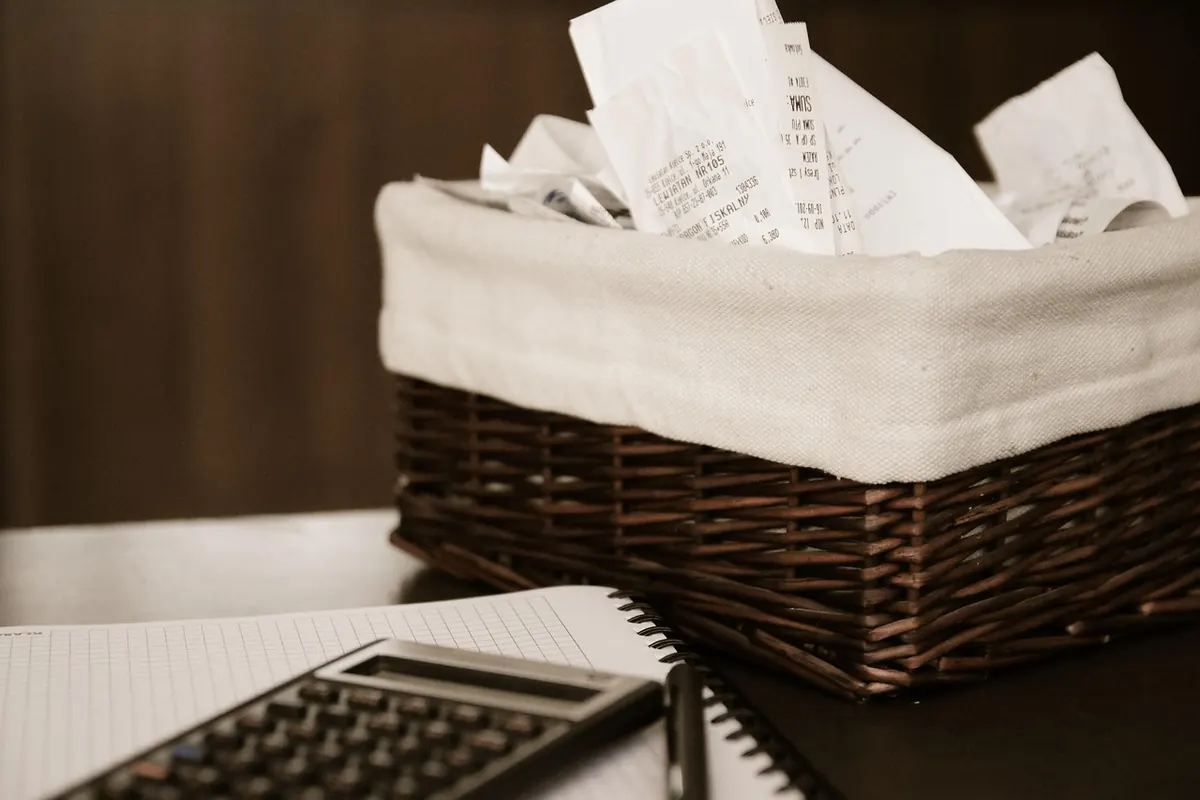
- Expense receipts: materials, packaging, postage, subscriptions, advertising, insurance, tools, professional fees. A photo in a dedicated folder works as well as a shoebox of paper, as long as it's legible and dated.
- Mileage record: date, journey, purpose, miles. HMRC publishes approved mileage rates you can use for cars and vans instead of hoarding every fuel receipt — currently 45p per mile for the first 10,000 miles, 25p thereafter.
- Home costs: if you work from home, note the space and the bills it relates to. There's a simplified flat-rate method (from £6 a week to £16 a week depending on hours) as well as a proportionate one. Pick one and stick to it.
- Banking: a separate account, or at least a clearly labelled pot, saves hours of sorting later. It also makes it obvious if your side income is creeping towards the threshold.
- Contracts and messages: briefs, invoices, orders — anything that shows what the work was and when it happened. Screenshots of chat agreements are better than nothing.
- Anything unusual: a large one-off payment, a refund, a returned item, stock given to you. Write a note at the time, while you still remember why. Future you will be grateful.
Keep records for at least five years after the 31 January deadline for the return they relate to. That sounds excessive in year one. It stops sounding excessive the first time HMRC asks a question.
What happens when you cross the £1,000 line
Once your gross trading income goes over £1,000, you need to register for Self Assessment if you haven't already. The deadline is 5 October after the end of the tax year in which you started trading. So if you started in the 2024/25 tax year (which ended 5 April 2025), you need to register by 5 October 2025.
When you fill in your return, you have a choice: use the £1,000 trading allowance, or deduct your actual expenses. You cannot do both. The allowance is usually simpler, but if your expenses are higher than £1,000, deducting them will reduce your tax bill more. For example, if you earned £1,500 and spent £1,200 on materials, using the allowance leaves £500 taxable, while deducting expenses leaves £300 taxable. Run the numbers both ways each year and pick the better option.
Common record-keeping mistakes to avoid
- Assuming the allowance means no records. It doesn't. If you cross the line, you need to prove your income and expenses from day one.
- Mixing personal and business spending. A separate account or pot makes everything clearer and faster to reconcile.
- Recording net income only. HMRC wants gross. Platform fees and postage are expenses, not deductions from income at source.
- Forgetting the small stuff. A £3 roll of tape, a £12 domain name, a £20 ad boost — they add up, and they're all deductible if they're wholly and exclusively for the business.
- Leaving it until January. Monthly updates take minutes. Annual panic takes days.
Dates worth putting in your calendar now
- 6 April: a new tax year starts. File last year's paperwork away and open a fresh folder. Note your starting mileage if you use a car.
- 5 October: deadline to register for Self Assessment if you started trading in the previous tax year and need to file.
- 31 October: deadline for a paper return.
- 31 January: online return and payment deadline for the previous tax year.
- 31 July: second payment on account, if your bill was large enough to trigger one.
A simple system that works
You don't need accounting software. A spreadsheet with tabs for income, expenses, mileage and home costs, plus a cloud folder for receipts, is enough for most side hustles. Set a monthly reminder to update it, and spend ten minutes reconciling your bank account. That's it. If you do cross £1,000, you'll have everything you need to file accurately and claim what you're owed.
If your side income stays under £1,000, you don't need to tell HMRC or file a tax return for it. But if it creeps over — or if you expect it to — start the paperwork now. The system is not designed to catch you out; it's designed to be done properly, and the earlier you start, the less painful it is. Keep the records, watch the gross total, and the £1,000 milestone becomes just another date in your calendar rather than a nasty surprise.
Photo: jarmoluk / Pixabay